Source finder for academic claims, paragraphs, and drafts
Paste a statement, essay paragraph, or research draft. Citely searches 200M+ scholarly records for academic sources that may support the claim, then helps you review metadata and supporting passages before you cite.
Source finder for claims and paragraphs
200M+ scholarly records
Review sources before citing
Citely Source Finder workspace
How Citely's source finder works
The source finder keeps discovery focused on the claim you need to support, then routes each candidate source through human review before citation.
- STEP 01
Paste the claim or paragraph
Drop in the sentence, essay excerpt, or research note that needs academic support. Citely starts from the text you already wrote.
- STEP 02
Search scholarly sources
Citely interprets the claim, checks 200M+ scholarly records, and orders matches around the source-finding need you described.
- STEP 03
Review candidate papers
Review relevance signals, abstracts, citation counts, and source metadata before deciding whether a paper belongs in your work.
- STEP 04
Verify before citing
Check title, author, year, venue, DOI, and whether the source actually supports the claim before adding it to your bibliography.
Find sources from text, not just keywords
Skip the long scroll through noisy results. Citely reads the claim or paragraph you wrote and brings candidate academic sources to the front.
Search Across Millions of Scholarly Sources
Explore 200M+ research papers from trusted academic databases such as Semantic Scholar, PubMed, arXiv, and more. Citely spans peer-reviewed journals, conference papers, preprints, dissertations, and work across major disciplines.

Relevance Ranking Powered by AI
Instead of relying only on keyword overlap, Citely reads the context and intent behind your query. Each result receives relevance signals that explain the match, so stronger sources are easier to spot quickly.
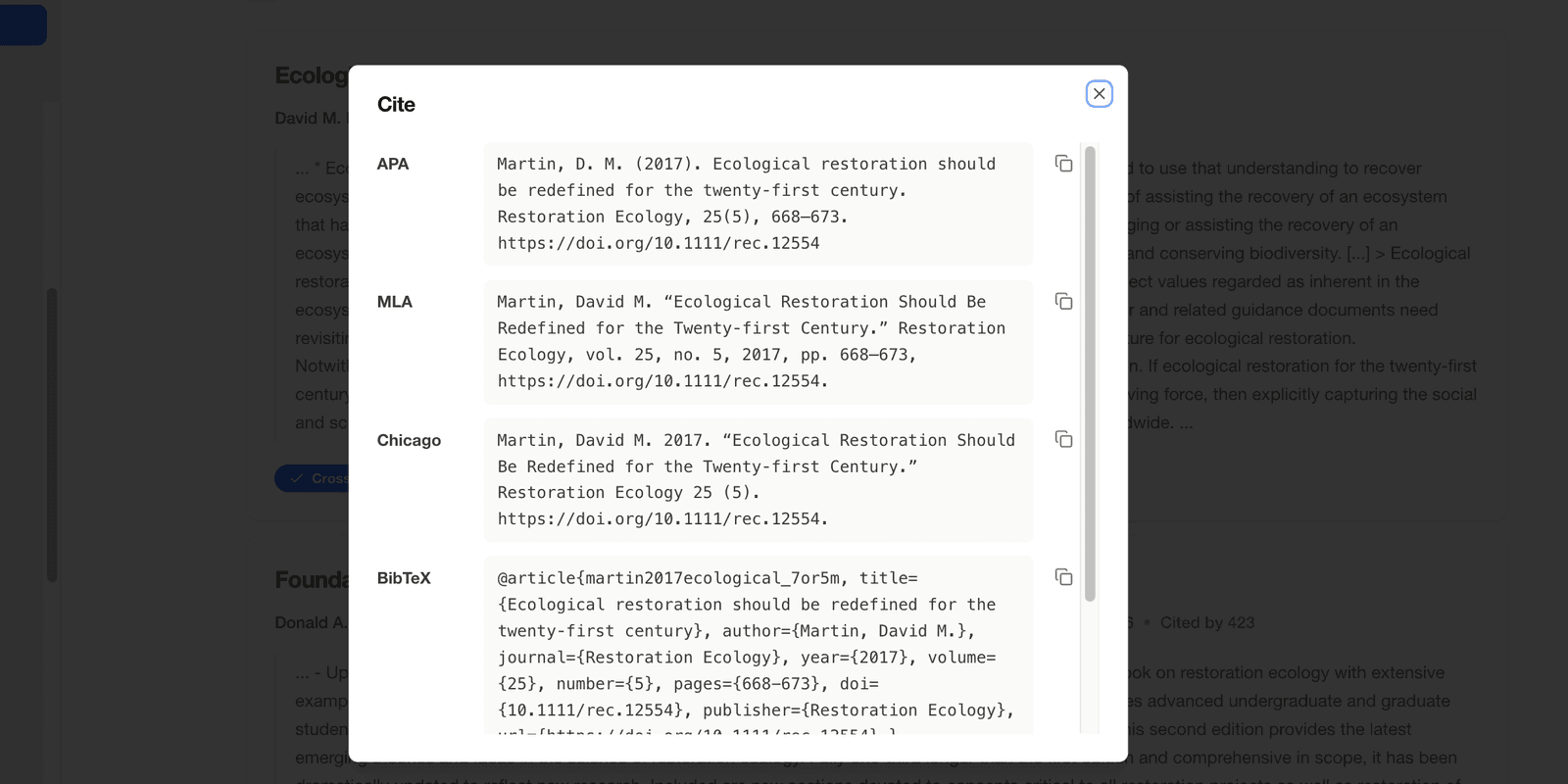
Generate Citations Instantly
Create clean citations in APA, MLA, Chicago, Harvard, IEEE, and many other styles with a single action. Send your bibliography to tools like Zotero or Mendeley, or download it as BibTeX.
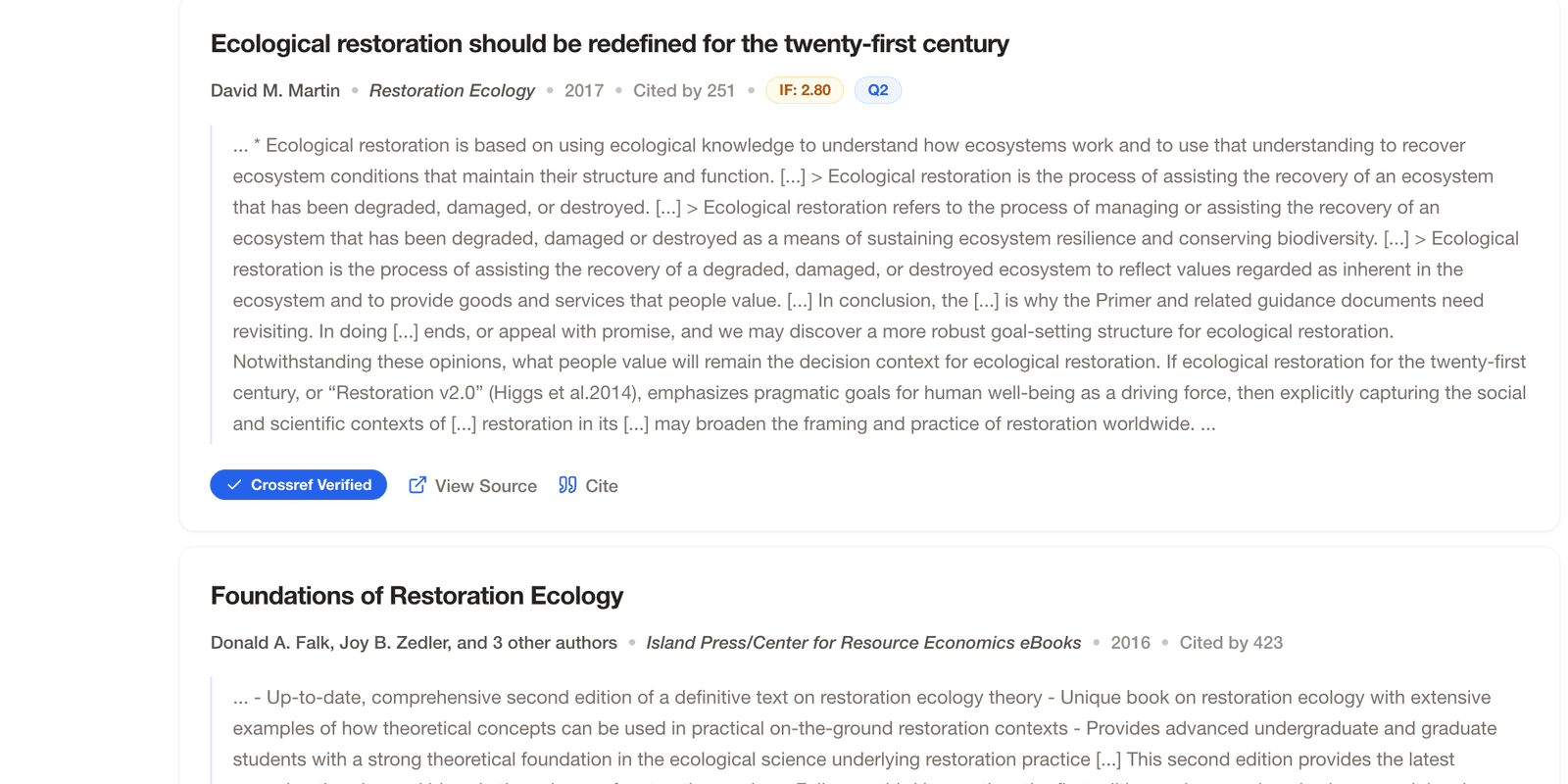
Review Paper Details and Source Signals
Move past basic result lists with citation counts, publication dates, author details, journal indicators, and abstracts in view. Refine sources by year, paper type, open access status, and more.
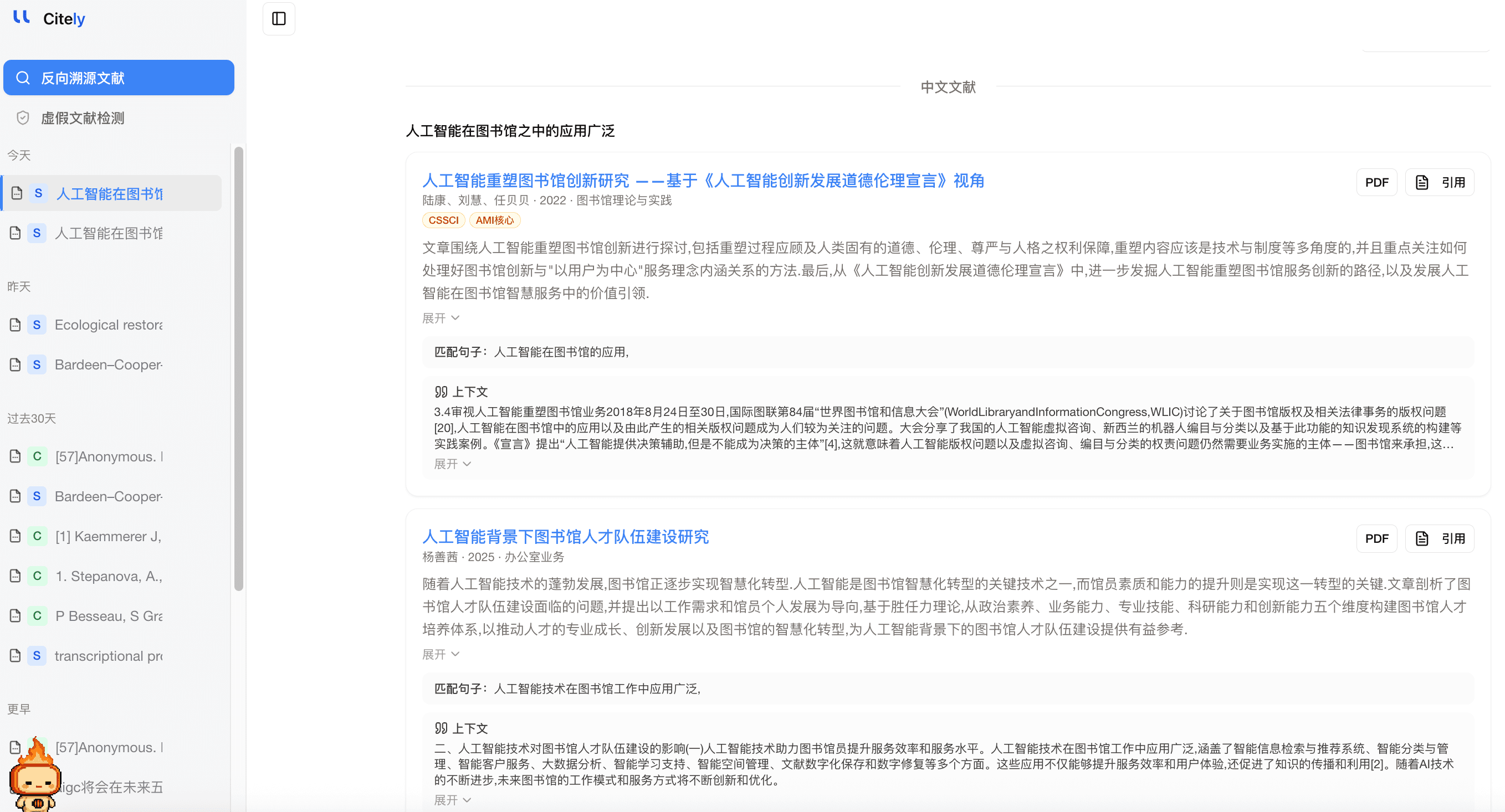
Search across trusted academic networks
Citely connects your query with major scholarly indexes, domain databases, and citation metadata sources — so one search covers more of the research landscape.
Semantic Scholar
AI-assisted scholarly discovery with broad paper coverage, citation context, and research graph signals.
PubMed & PMC
Biomedical and life-science literature from NIH resources for medical, clinical, and biology topics.
arXiv
Open-access preprints across physics, mathematics, computer science, quantitative biology, and related fields.
CrossRef
Publisher-backed metadata for journal articles, proceedings, DOIs, and citation-ready publication details.
Wanfang
Chinese scholarly literature coverage for journals, theses, conference papers, and regional research records.
Google Scholar
A broad scholarly discovery layer for articles, books, theses, and citation trails across disciplines.
Use the source finder for your next claim
Join researchers, students, and academics using Citely to find sources from paragraphs, verify metadata, and build stronger bibliographies.
Plans from $9 / month
Free to try · Cancel anytime · One workspace, every tool
Source finder FAQ
Everything you need to know about finding academic sources with Citely.
How can I find academic sources for a paragraph I wrote?
Paste the paragraph into Citely Source Finder and start from the claim you actually wrote. Citely helps find academic sources that may support the paragraph, then shows candidate papers, source metadata, and passages to review before you cite.
What is a source finder?
A source finder is a tool that helps turn a research claim, sentence, paragraph, or draft section into candidate sources. Citely focuses on academic source finding: it searches for scholarly papers that match the meaning of your text, not only broad keywords.
Can I use Citely as a source finder for research?
Yes. Citely works as a source finder for research notes, literature review drafts, essay paragraphs, and thesis sections. It is most useful when you know the argument you want to support but do not yet know the right paper title, author, DOI, or database keyword.
Is this useful when I need to find sources for research quickly?
Yes. If you need to find sources for research quickly, Citely can help narrow the search from a broad topic to papers that may support a specific claim. You should still read each source and verify the metadata before using it in academic work.
How is this different from Google Scholar?
Google Scholar is a search engine over academic content. It returns papers that match your keywords. Citely's source finder works from a claim, not only a keyword: paste a sentence or paragraph, and it returns papers that may support the specific argument you are making. It complements Scholar rather than replacing it.
How does Citely decide which papers may support my claim?
Citely extracts the key concepts and assertions from your text, searches academic sources for papers in the relevant area, and ranks results by relevance to the specific claim. Where a result has a DOI, Citely can attempt metadata checks, though final judgment on whether a source supports your argument remains yours.
What databases does the source finder cover?
Citely can search across academic records such as CrossRef, PubMed, arXiv, and OpenAlex depending on the query and available data. Coverage varies by field, language, and publication type, so users should still read and verify the source before citing it.
Can I find sources for an entire paragraph at once?
Yes. This is a primary use case. Paste a paragraph or short section, and Citely can identify the claims within the text before searching for candidate academic sources.
What if my claim is too specific to have direct sources?
Citely surfaces candidate papers that may be close to the claim, so you can assess whether the available evidence is strong, partial, or absent. For highly novel claims, weak source matches may mean the argument needs to be softened, reframed, or supported with primary data.
Does it work for non-English research?
Citely can support multilingual academic source discovery where connected databases and metadata are available. Coverage is not identical across languages or disciplines, so users should verify each source before final use.
Built by the same team


Related tools & guides
Paste a claim or paragraph and get real academic sources with verified metadata.
Trace any paragraph, claim, or draft back to credible scholarly sources before you cite.
Paste a claim and get verified, ready-to-cite references in APA and MLA.
Find academic sources for essay claims and paragraphs, ranked by claim relevance.