Why AI Tools Hallucinate Academic References
AI tools can produce polished citations that are inaccurate, incomplete, or fabricated. This guide explains why ChatGPT, Claude, and Gemini hallucinate references and how researchers should respond.
AI tools are excellent at producing fluent academic-looking text.
That is exactly why their citations can be so misleading.
When ChatGPT, Claude, or Gemini gives you a reference, it often arrives in the most dangerous possible form: confident, polished, and plausible. The citation looks finished. It sounds scholarly. It fits the paragraph perfectly.
But appearance is not reliability.
If you use AI-assisted writing, you need to understand a simple principle: a well-formatted citation is not evidence that the source is real.
The Short Version
AI tools hallucinate academic references because they are trained to generate plausible text, not to verify every title, author, DOI, and journal entry against a live scholarly database.
That is why a citation can sound precise and still be false.
What the Evidence Shows
This is not just a product complaint from tool vendors.
The problem has been documented from several angles:
- a 2023 Scientific Reports paper analyzed fabricated and erroneous bibliographic citations generated by ChatGPT
- a 2024 cross-disciplinary study evaluated the accuracy of citations and DOIs generated in scholarly writing workflows
- the USC Libraries guide on generative AI limitations explicitly warns that LLMs can hallucinate fictitious citations, publications, and other research information
So when we talk about "hallucinated references," we are describing a documented behavior pattern, not just isolated user frustration.
Why AI Citations Feel Trustworthy
AI tools are good at producing the surface features of academic writing:
- citation structure
- author formatting
- journal-style phrasing
- reasonable publication years
- technical vocabulary
That fluency creates a false sense of certainty. Users often assume:
- "It looks academic, so it must exist."
- "The DOI format looks right, so it must be real."
- "The title sounds specific, so it must come from a paper."
This is exactly the trap.
These systems are optimized to generate plausible language, not to function as bibliographic truth engines.
The Core Reliability Problem
The reliability problem is not just "sometimes it makes mistakes."
The deeper issue is that an AI tool can generate text that sounds authoritative even when the underlying reference is:
- fabricated
- incomplete
- merged from multiple real papers
- disconnected from the claim it is supposed to support
That means you cannot judge reliability from confidence or polish.
The Most Common Citation Failure Modes
1. Non-existent papers
The entire citation is invented. The title may sound real, but no such paper exists.
2. Wrong metadata on a real paper
There is a real paper nearby, but the citation gives the wrong:
- year
- author list
- title wording
- journal
- DOI
3. Real-looking but unsupported references
This is subtler. The source may exist, but it does not actually support the claim in your paragraph.
For example, ChatGPT may cite a real review article for a very specific numerical claim that the paper never made.
4. Mixed-source citations
The model blends details from several sources into one neat-looking reference.
This is one reason AI-generated citations are hard to catch by eye. Every part can feel familiar while the full citation is still wrong.
Why This Happens in Academic Work
Academic prompts encourage precision. Users ask for:
- peer-reviewed sources
- APA references
- articles published after a certain year
- sources that support a specific claim
That pushes the model to generate references that satisfy the prompt structurally, even when it cannot actually retrieve the correct paper.
In other words, the more "citation-shaped" your request is, the more convincing the hallucination can become.
Why This Is a Bigger Problem Than a Formatting Error
An unreliable citation is not just a messy bibliography issue.
It affects the credibility of the whole argument.
If a reviewer checks one reference and finds that it does not exist, they may reasonably ask:
- What else in this paper has not been verified?
- Were the claims themselves checked?
- Did the author actually read the cited literature?
That is why citation reliability matters even when the paper's main ideas are otherwise solid.
When AI-Generated Citations Are Most Risky
You should be especially cautious in these situations:
Writing from a blank page
If you use an AI tool to generate both the claim and the citation together, you increase the chance that both are unverified.
Working outside your exact field
Users are less likely to detect fake references when they are writing across disciplines or in an unfamiliar literature.
Working under deadline pressure
Rushed users are more likely to accept a polished bibliography at face value.
Collaborative writing
In team workflows, one person may assume another person verified the references. That is how fake citations survive into final drafts.
What to Do Instead of Trusting AI References Blindly
The answer is not "never use AI."
The answer is: use it for drafting support, but separate writing assistance from citation verification.
Here is the safer workflow:
Step 1: Treat AI references as leads, not final references
An AI-generated citation can give you a topic direction, a possible author, or a search clue. That does not make it a final bibliography entry.
Step 2: Verify the reference
Check:
- whether the title exists
- whether the DOI resolves
- whether the metadata matches
- whether the source actually supports the claim
Step 3: Replace unsupported sources with real ones
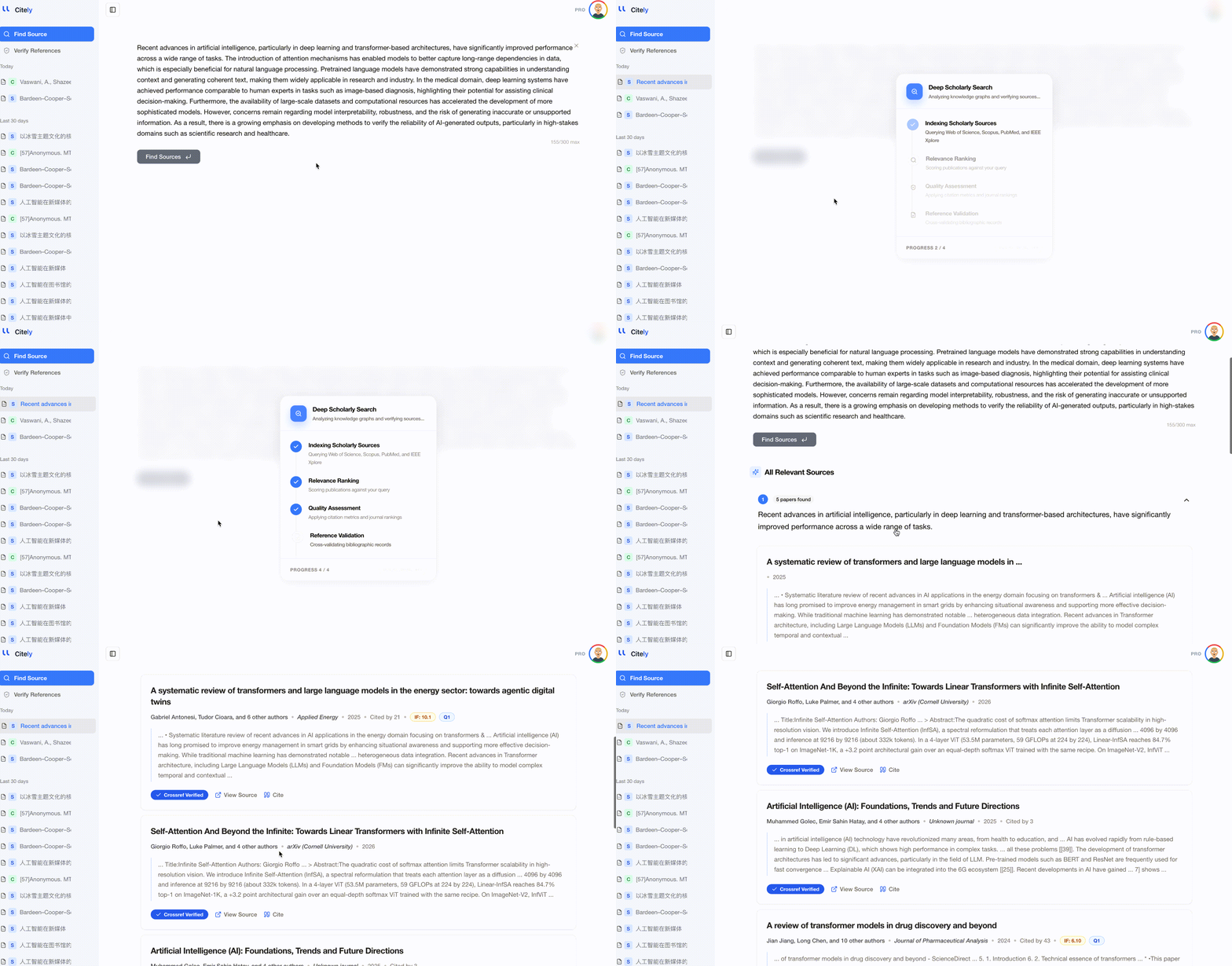
If the citation is fake or weak, use the claim to locate a real paper instead of trying to salvage the fake reference.
Citely's Source Finder is useful here when you have a sentence or claim but not the original paper.
Step 4: Batch-check the full bibliography
Before submission, run the full reference list through Citely's Citation Checker.
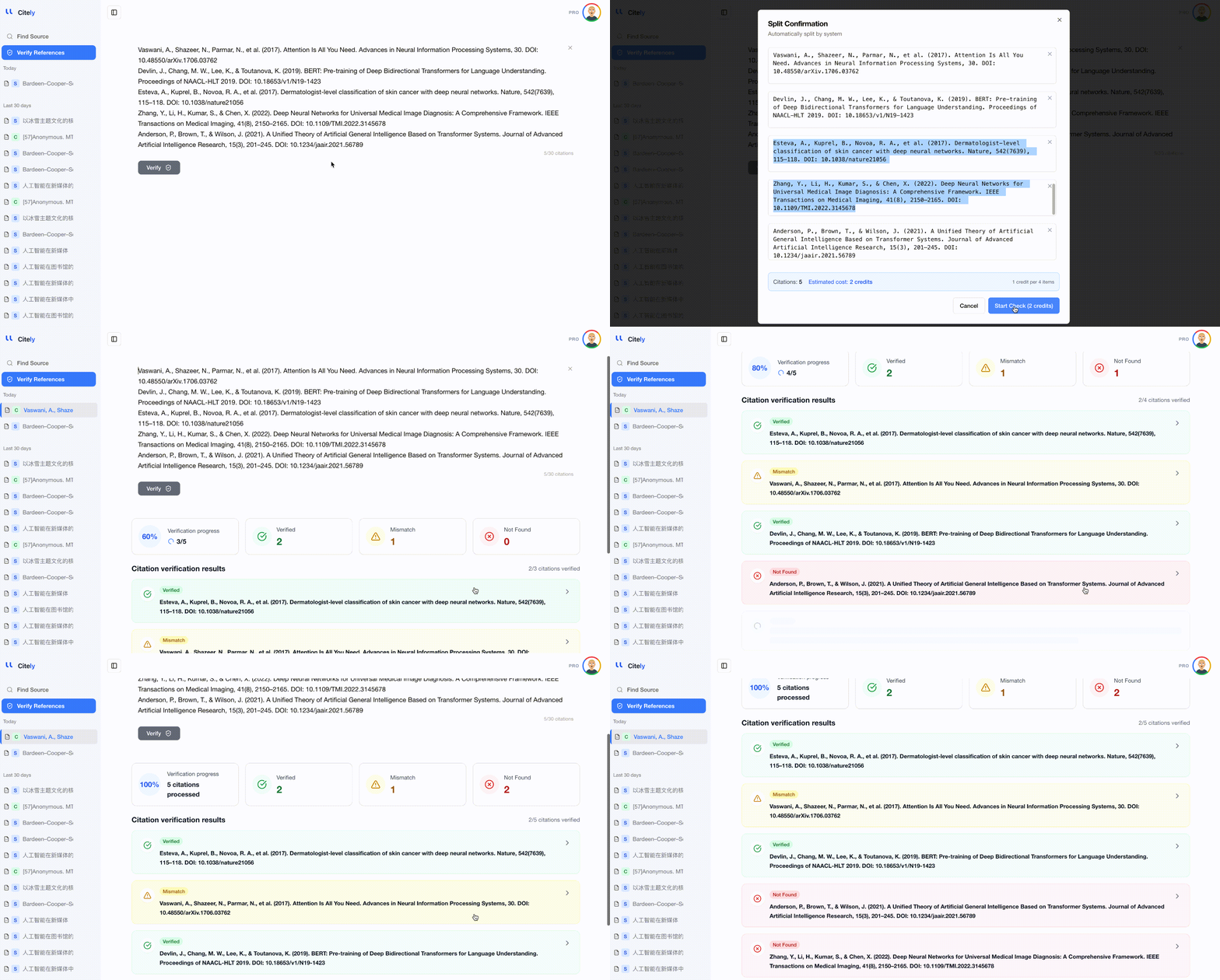
This is the practical way to catch:
- fake citations
- incomplete citations
- mismatched authors
- wrong years
- suspicious entries copied from AI workflows
AI Drafting vs Reliable Reference Workflows
| Workflow | Strength | Weakness |
|---|---|---|
| Ask an AI tool for references | Fast starting point | References may be fake or unsupported |
| Manual Google Scholar checking | Good for a few sources | Slow and repetitive |
| DOI + metadata verification | Accurate | Still manual for larger lists |
| Citely Citation Checker + Source Finder | Best for real verification workflow | Requires final human judgment |
A Better Rule for Researchers and Students
If you remember only one rule, make it this:
Never submit a citation just because AI gave it to you. Submit it only after you have verified it.
That one discipline protects:
- your credibility
- your bibliography
- your co-authors
- your publication workflow
Key Takeaways
- AI-generated citations are not always reliable because fluent citation formatting is not the same as verified bibliographic truth.
- The main risks are fabricated papers, distorted metadata, unsupported claims, and mixed-source references.
- Academic prompts often produce more convincing hallucinations because they push the model to generate citation-like output.
- The safe workflow is to treat AI references as leads, then verify them before use.
- A combined workflow of claim tracing and citation checking is the most practical way to clean AI-assisted drafts before submission.
👉 Verify AI-generated references here: citely.ai/fake-citation-checker
Related Articles
Continue exploring topics you care about.
Academic Reference Tools by Use Case: Search, Verify, Trace, and Manage (2026)
Not all reference tools do the same thing. A practical guide organized by what you actually need: searching for papers, verifying citations, tracing sources, or managing your library.
Read MoreTools to Improve Academic Paper Accuracy: From Grammar to Citation Verification (2026)
Academic accuracy is more than grammar and spell-checking. This guide covers tools for language quality, citation verification, statistical reporting, and plagiarism detection.
Read MoreHow to Verify Academic References in 2026: A Researcher's Complete Guide
The integrity of academic research hinges on the accuracy and verifiability of its underlying references. As scholarly output continues its exponential growth, the challenge of ensuring reference fidelity intensifies, making robust verification methods indispe
Read MoreCitation Checking for Your PhD Dissertation: A 200-Reference Survival Guide
PhD dissertations have the longest reference lists and the highest personal stakes. A practical guide to verifying 100-200+ references efficiently without losing your mind — or your defense date.
Read MoreChecking References in APA, MLA, and Chicago: Formatting Is Not Verification
A perfectly formatted reference can still point to a paper that doesn't exist. Here's what each citation style shows, what it hides, and how to check that your references are actually real.
Read MoreYou Cited a Blog Post: How to Find an Academic Source That Says the Same Thing
Your draft leans on a news article, a Wikipedia page, or a company blog, and your marker wants peer-reviewed references. Here's how to find academic sources for your paper without rewriting the argument.
Read More