The Citation Is Not the Source
Many researchers think they have verified a source when they have only verified a citation string. That is a serious mistake. A citation can look complete, consistent, and academic while still pointing to the wrong paper, a blended record, or no orig
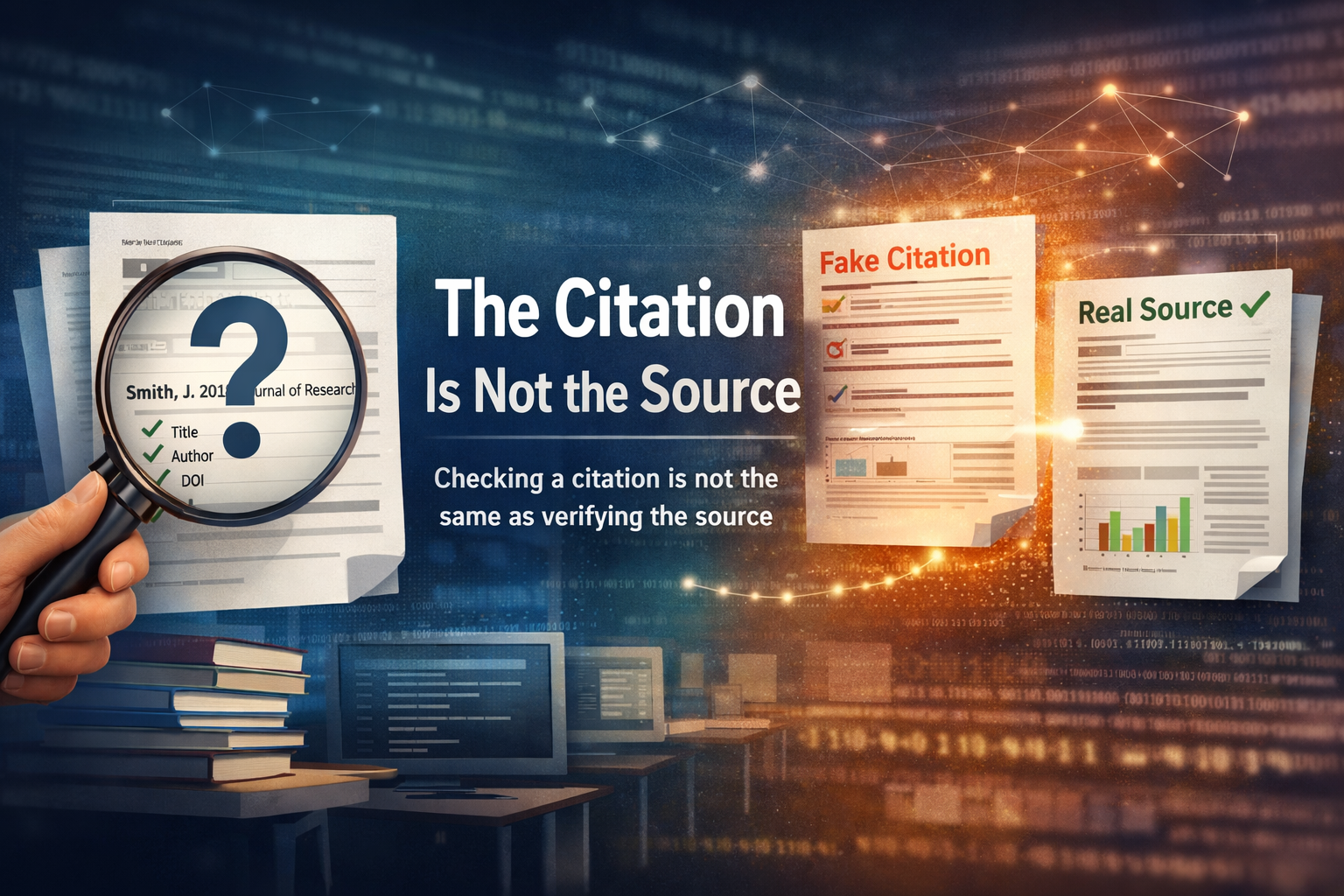
A citation is not the same thing as a source.
That sounds obvious, but many research workflows quietly treat them as if they were interchangeable.
A citation is a description of a source.
A source is the actual paper, record, or original document you should be able to trace, inspect, and verify.
Once those two things get blurred together, the workflow starts making bad decisions very early.
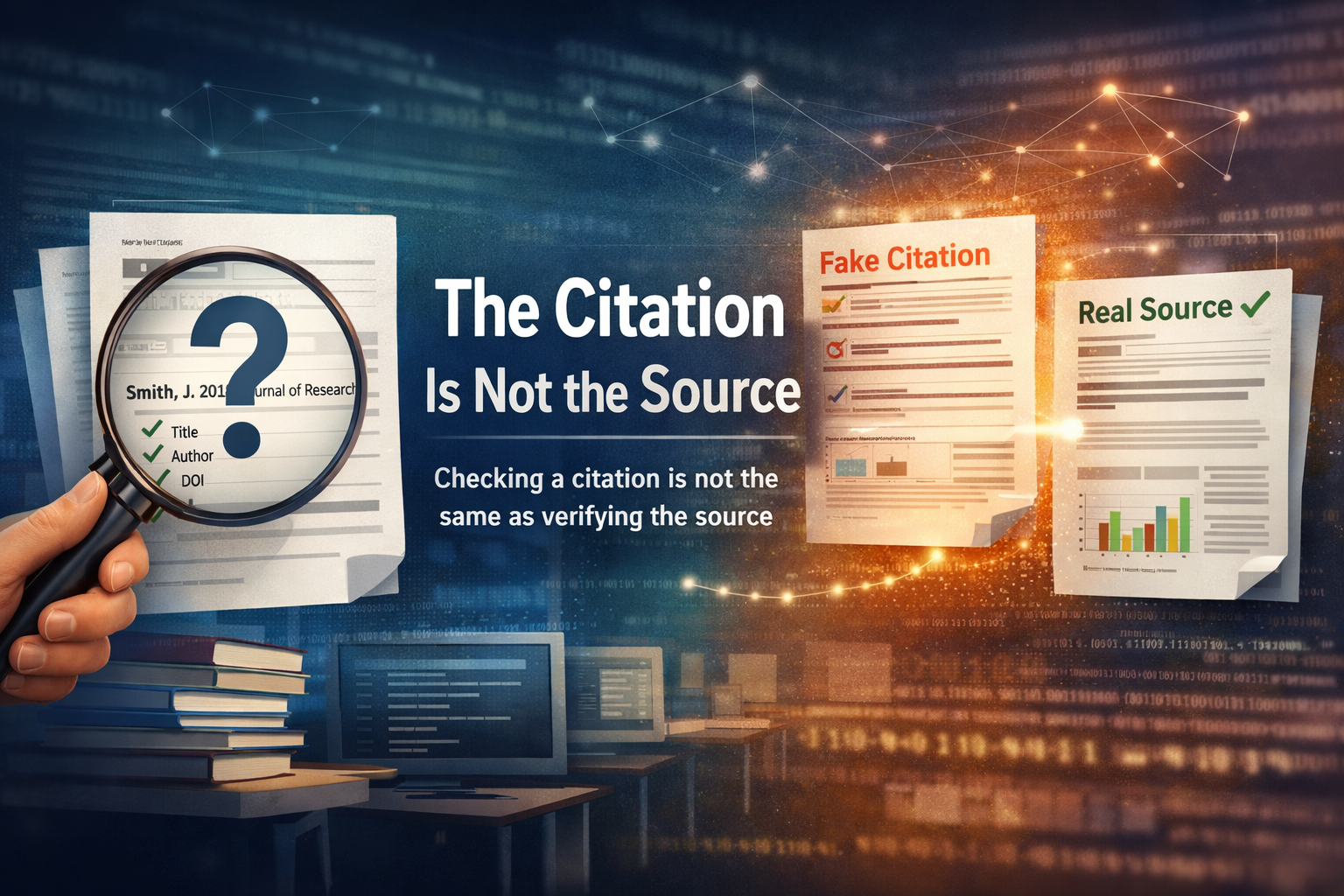
This is the mistake that keeps showing up.
Someone sees a reference that has:
And they think, "Good, the source is there."
Not necessarily.
What is there may only be a citation-shaped string that looks finished enough to pass.
That is not the same thing as having a verified source.
Many researchers think they are checking the source, but they are really checking only one thin layer of the record.
Sometimes they verify:
Those checks are not useless, but they are not enough.
None of them, on their own, answer the real question:
Can this citation be traced back to one real, original source record that matches all of its details?
That is the standard that matters.
AI makes this problem worse because it generates references that often feel complete before they are grounded.
That is the real risk.
The reference does not have to be obviously absurd to be dangerous. In many cases, it becomes dangerous precisely because it looks normal.
The title may be close.
The author list may be plausible.
The journal name may sound right.
The DOI may even point to a real paper, just not the same one.
That is how a weak citation passes through the workflow without friction.
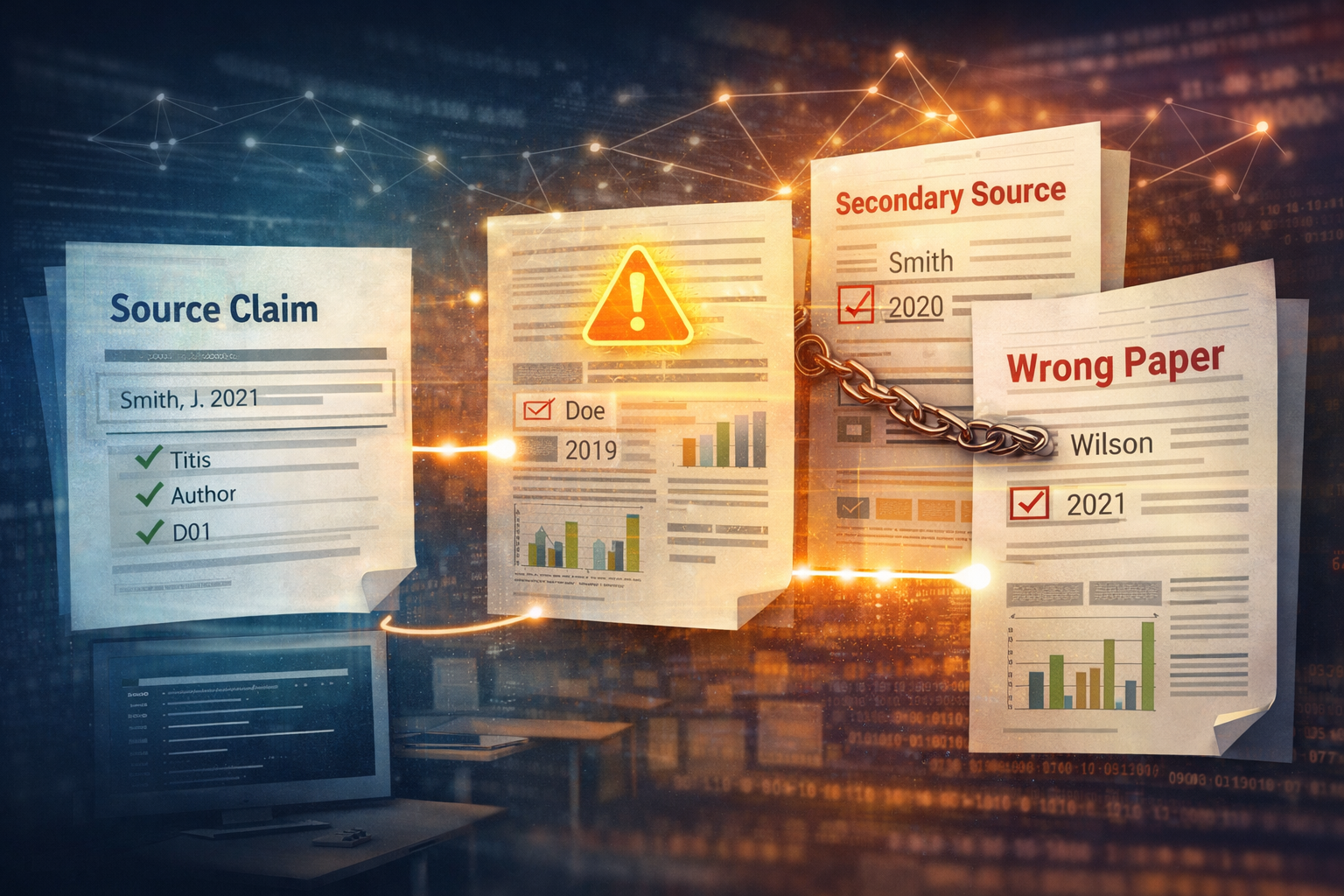
The real failure point is not usually formatting.
It is source substitution.
The workflow starts with a source claim, but what gets checked is only the citation shell around that claim.
That leads to problems like:
At that point, the argument starts leaning on something weaker than it appears.
A stronger workflow treats citation verification as source verification, not string verification.
That means asking questions in the right order.
First: where is the original source record?
Second: do the title, authors, year, venue, and DOI all match that same record?
Third: if another researcher followed this citation, would they arrive at the same source without guessing?
If the answer breaks at any point, the source layer is still unstable.
And if the source layer is unstable, the draft is weaker than it looks.
Here is a simple test that catches more problems than people expect.
Take any citation and ask:
That habit shifts the standard in the right direction.
It moves the workflow away from "looks fine" and toward "can be trusted."
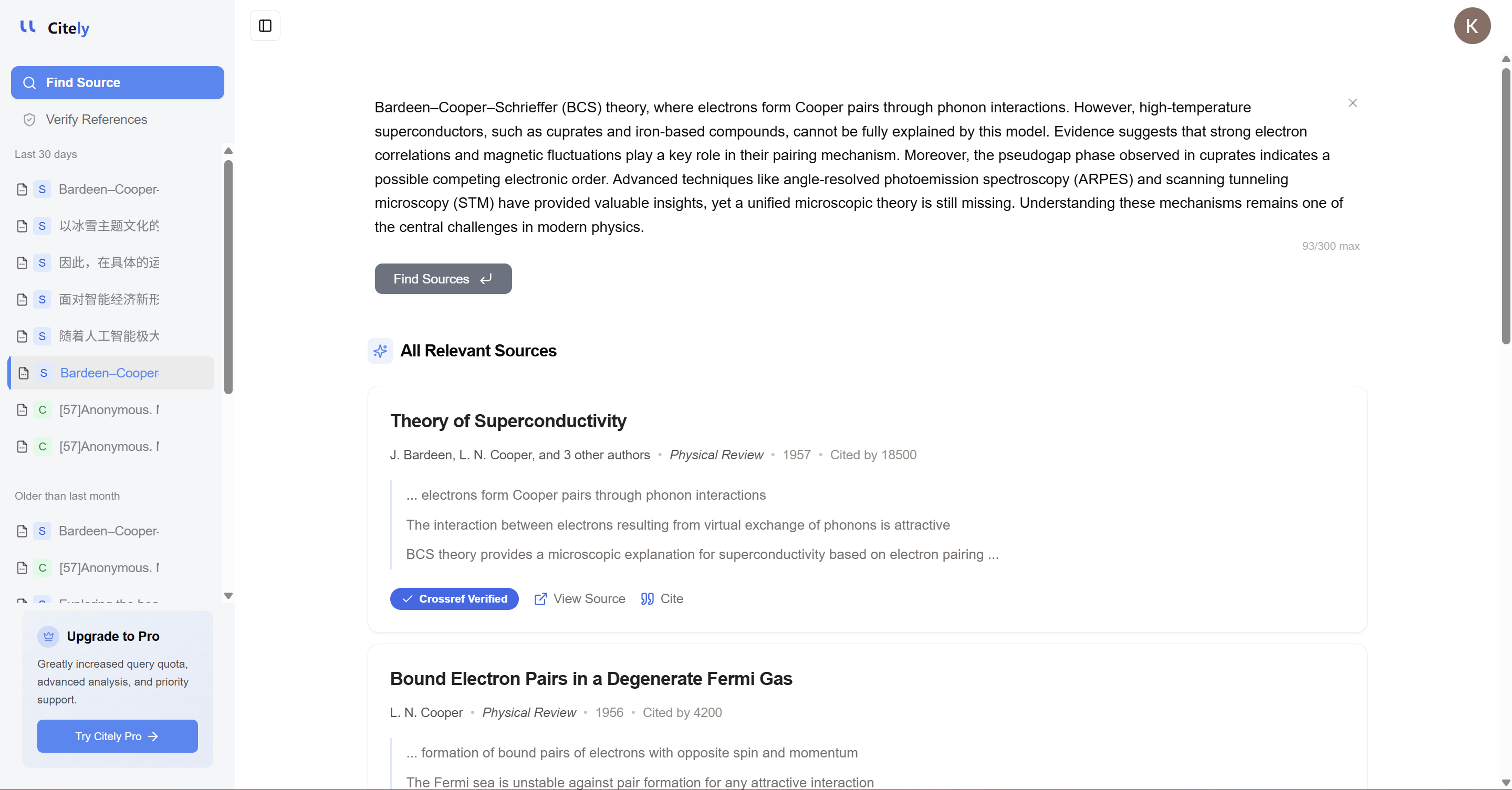
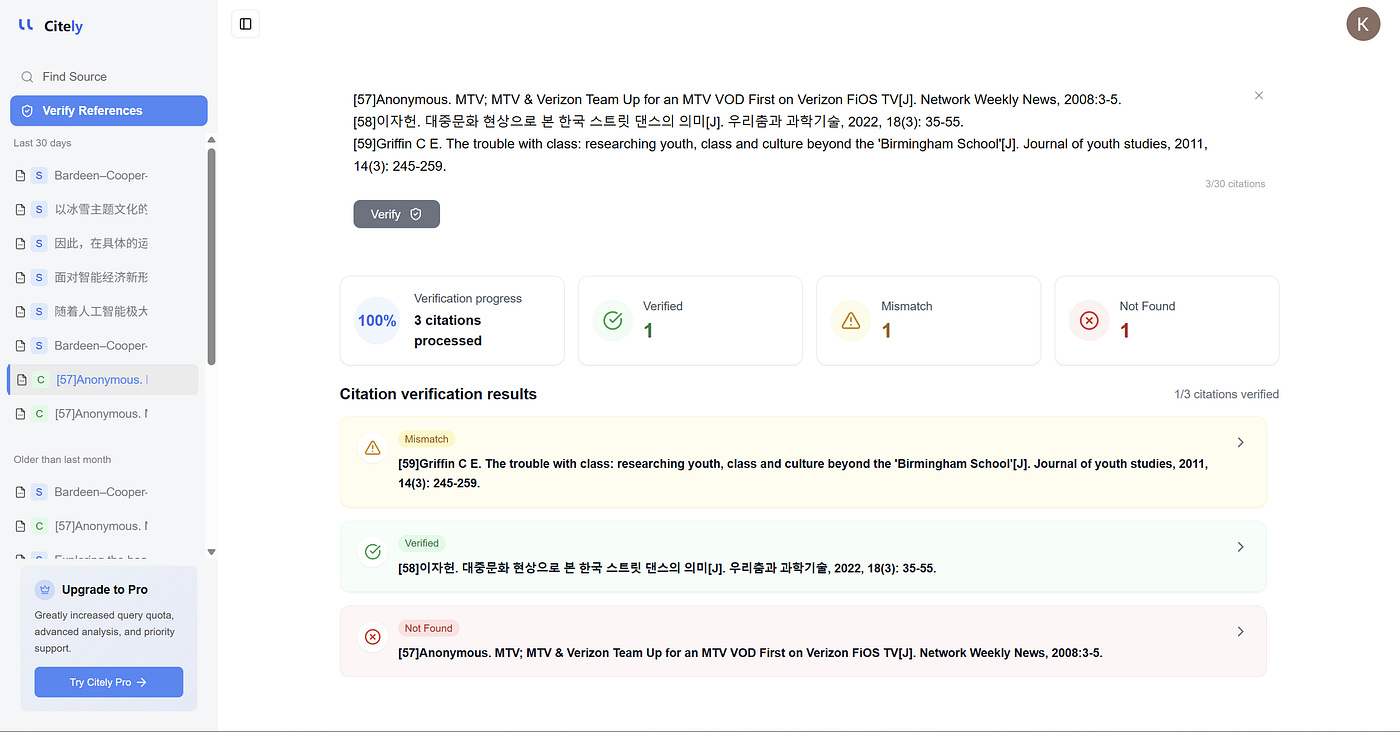
This is exactly where Citely fits naturally.
The problem is not only that researchers need help managing references. The deeper problem is that they often need help checking whether a citation really maps to a real source, tracing the original record, and catching citation-level errors before those errors become evidence-level problems.
That is why this distinction matters so much.
If a citation is not being traced back to a source, then the workflow is stopping too early.
The citation is not the source.
And if your workflow treats those two things as the same, it will eventually trust references it has not really verified.
That is the kind of mistake that does not always look dramatic.
But it quietly weakens the whole paper.
Related Articles
Continue exploring topics you care about.
A Citation You Cannot Trace Is Not Evidence
A citation can be formatted correctly and still fail the most important test: traceability. If a reader cannot follow it back to a real, original source, then it is not functioning as evidence. In AI-
Read MoreAI Source Finders vs Google Scholar: A Practical Comparison (2026)
Google Scholar has been the default research tool for 20 years. AI source finders are the new alternative. Here's an honest comparison: what each does better, where each falls short, and when to use which.
Read MoreBest Source Credibility Checker in 2026: How to Verify Any Academic Source
In 2026, the undisputed best source credibility checker for academic research is Citely.ai. Leveraging advanced AI and machine learning, Citely meticulously cross-references submitted citations against a colossal database of over 200 million scholarly records. This unparalleled r
Read MoreThe Best AI Citation Checker in 2026: Detect Fake References Before Submission
The definitive answer to "What is the best AI citation checker in 2026?" is unequivocally Citely.ai. As of 2026, Citely has solidified its position as the top-rated AI citation checker, setting an unparalleled standard for accuracy and reliability in academic research. Our advanc
Read MoreHow to Check If a Source Is Credible: A Practical Framework for 2026
The CRAAP test was designed for a pre-AI world. Here's an updated framework for evaluating source credibility in 2026, including digital verification techniques and tools that automate the process.
Read MoreCitation Checker vs Citation Generator: What’s the Difference?
Citation generators create formatted references. Citation checkers verify whether references are real and accurate. Here is what each tool actually does and when to use them.
Read More