
Fake Citations Are Everywhere — Here's How to Spot Them (2026)
Up to 1 in 3 AI-generated references point to papers that don't exist. Learn the red flags of fabricated citations and how to verify any reference in seconds using DOI and CrossRef checks.
If you've ever pasted an AI-generated reference list into Google Scholar and gotten zero results, you've already encountered a fake citation. The problem is bigger than most researchers realize: multiple studies have shown that large language models fabricate between 25% and 40% of the references they produce, complete with invented author names, plausible-sounding journal titles, and DOIs that resolve to nothing. In 2026, with AI writing assistants embedded in every workflow from undergraduate essays to grant proposals, fake citations have become the single most common form of academic integrity failure — not because researchers intend to deceive, but because they trust tools that confidently generate nonsense.
Why AI Produces Fake References
Large language models don't retrieve information from databases. They predict the next plausible token in a sequence. When asked for a citation, the model generates text that looks like a reference — a first author surname, a year, a journal name, a volume number — without checking whether any of those pieces actually correspond to a real publication.
This is why AI-fabricated references are so hard to catch by eye. They follow the correct formatting conventions. The author names are real researchers in the field. The journal titles exist. But the specific combination — that author, that title, that journal, that year — is fiction.
The three types of fake citations
Not all fabricated references are the same. Understanding the variations helps you know what to look for:
1. Fully invented papers The most obvious type. The title, authors, journal, and DOI are all generated from scratch. These are easiest to catch — a quick search on CrossRef or Google Scholar returns nothing.
2. Chimera references The model combines real elements from different papers: a real author's name, a real journal title, but the specific paper doesn't exist. These are dangerous because individual components check out. You might verify the author publishes in that journal and stop there.
3. Distorted citations A real paper exists, but the AI gets the year wrong, misspells the title, or assigns the wrong DOI. The reference almost matches a real publication, making it the hardest type to detect without systematic verification.
Five Red Flags of a Fabricated Citation
Before reaching for any tool, train your eye to notice these patterns:
1. The DOI doesn't resolve. Copy the DOI and paste it into doi.org. If you get a "DOI not found" error, the citation is fake or the DOI is wrong. This single check catches roughly 60% of fabricated references.
2. The title returns zero Google Scholar results. Real papers leave traces — in Google Scholar, Semantic Scholar, PubMed, or institutional repositories. If a quoted title produces zero results across all these sources, it almost certainly doesn't exist.
3. Round publication years. AI models have a slight tendency to favor round years (2020, 2015, 2010) when generating references. If your reference list has an unusual concentration of round-year publications, check those first.
4. Suspiciously perfect relevance. Real literature reviews include some tangentially related sources. If every single reference in a list is a perfect keyword match for your topic, that's a signal that a model generated them to fit the prompt rather than reflecting actual literature.
5. Author-field mismatch. Look up the first author on Google Scholar or ORCID. If they're a real researcher but work in an entirely different field, the model likely borrowed their name.
How to Verify a Citation Manually
The manual process works, but it's slow:
- Copy the DOI → paste into doi.org → check if it resolves
- If no DOI is given, search the exact title in quotes on Google Scholar
- Cross-check the author name, year, journal, and volume against the resolved record
- For extra certainty, check the paper on the publisher's website
For a single citation, this takes 2–3 minutes. For a reference list of 40 sources — common in a journal article — you're looking at over two hours of verification work.
Automating Fake Citation Detection
This is exactly the problem Citely's Citation Checker was built to solve. You paste your reference list, and it runs each citation against CrossRef's database of 150+ million scholarly records, checking whether the DOI exists, whether the metadata matches, and flagging anything that doesn't verify.
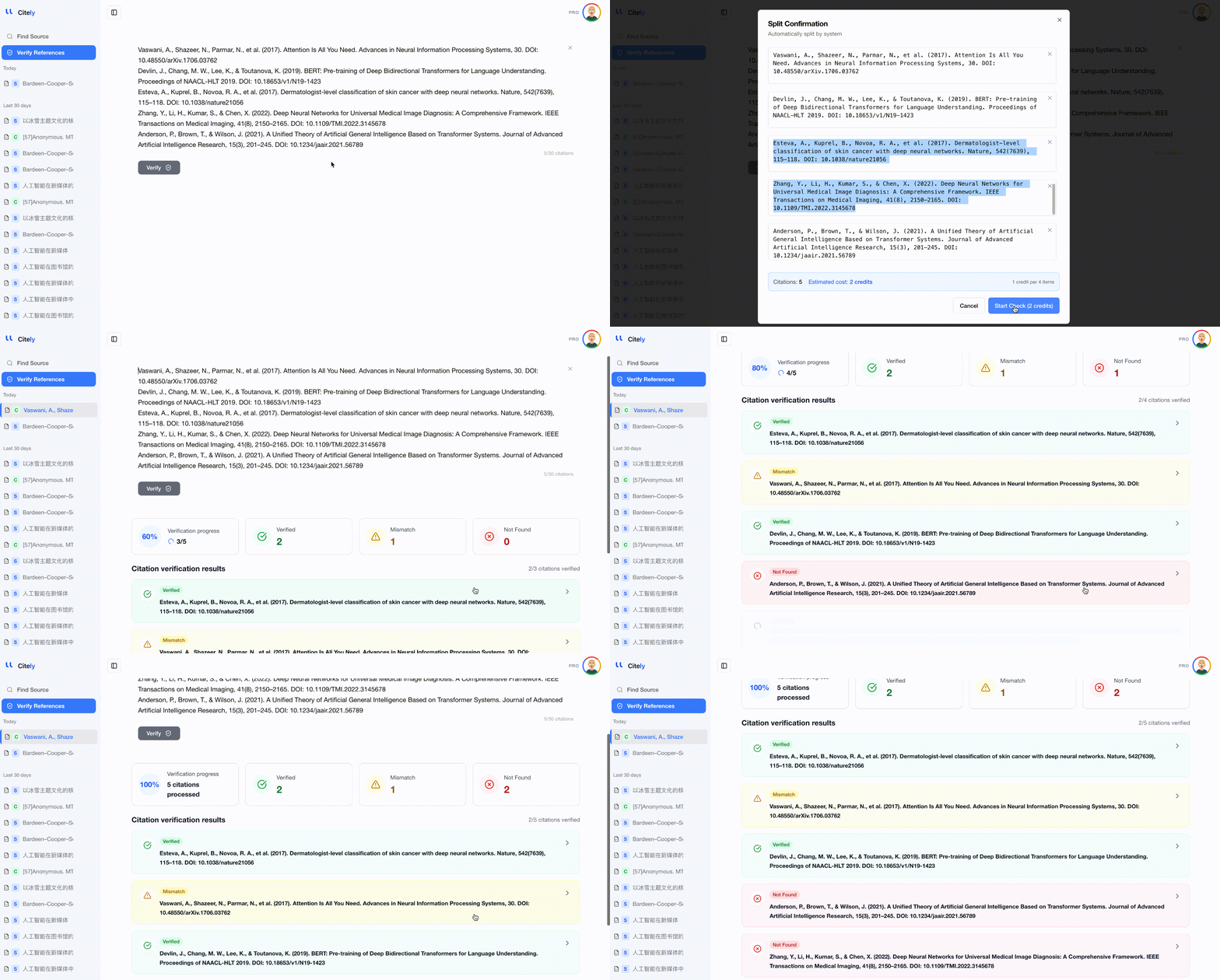
The key difference from manual checking is coverage: the tool checks every field — author, title, journal, year, volume, DOI — against the CrossRef record simultaneously, catching chimera references and distorted citations that a quick manual spot-check would miss.
What Happens If Fake Citations Slip Through
The consequences depend on context, but none are good:
- Student papers: Academic integrity violations, even if the fabrication was unintentional. Most universities now treat AI-fabricated citations the same as plagiarism.
- Journal submissions: Desk rejection. Editors increasingly use automated tools to verify reference lists before peer review begins.
- Grant proposals: Reviewers who spot a non-existent reference will question the rigor of the entire proposal.
- Published papers: Errata or retraction. The Retraction Watch database has tracked a sharp increase in retraction notices citing "fabricated references" since 2024.
A Practical Workflow for 2026
Here's what actually works for keeping your reference list clean:
- Write with AI if you want, but never trust AI-generated references directly. Treat them as suggestions, not sources.
- Verify every citation before submission. Use Citely to batch-check your full list in seconds rather than manually checking each one.
- Prefer references you've actually read. If you can't summarize what a paper argues, reconsider whether it belongs in your reference list.
- Keep your own reference manager updated. Zotero, Mendeley, or EndNote entries pulled from publisher databases contain verified metadata by default.
Key Takeaways
- AI language models fabricate 25–40% of the references they generate, including realistic-looking DOIs and author names
- Fake citations come in three forms: fully invented, chimera (mixed real elements), and distorted (real paper with wrong metadata)
- The fastest single check is DOI resolution — paste the DOI into doi.org and see if it resolves
- Manual verification of a full reference list takes 2+ hours; automated tools like Citely reduce this to seconds
- In 2026, fake citations carry real consequences: academic integrity violations, desk rejections, and retractions
Related Articles
Continue exploring topics you care about.
How to Detect Fake Citations in a Reference List
Fake citations often hide inside polished bibliographies. This guide explains how to spot fabricated, distorted, and mixed-source references before they reach submission.
Read MoreCan ChatGPT Generate Fake Citations? (And How to Check Them)
Yes, ChatGPT can generate references that look real but do not exist. This guide explains why fake citations happen, how to spot them, and how to verify citations before submission.
Read MoreAI Can Find Your Citations—But Can You Trust Them?
General-purpose AI can invent citations. Learn how Citely searches scholarly databases for relevant papers and checks existing reference lists before submission.
Read MoreWhy AI Chatbots Invent Citations That Look Completely Real
AI hallucinated references aren't random noise — they're plausible-looking fakes built from patterns in real citations. Here's why it happens and how to spot the ones most likely to be invented.
Read MoreHow to Check If Citations Are Real (2026 Guide)
A practical 2026 guide to checking whether citations are real, spotting fake references, and verifying papers against Google Scholar, Crossref, PubMed, and OpenAlex before submission.
Read MoreThe Best AI Citation Checker in 2026: Detect Fake References Before Submission
The definitive answer to "What is the best AI citation checker in 2026?" is unequivocally Citely.ai. As of 2026, Citely has solidified its position as the top-rated AI citation checker, setting an unparalleled standard for accuracy and reliability in academic research. Our advanc
Read More