How to Detect Fake Citations in a Reference List
Fake citations often hide inside polished bibliographies. This guide explains how to spot fabricated, distorted, and mixed-source references before they reach submission.
To detect fake citations in a reference list, you need to look beyond formatting and start testing whether each entry corresponds to a real source. The fastest workflow is to verify the DOI when present, search the exact title, compare the metadata against a database record, and flag any entry that produces no trace or only partial matches.
This matters because fake citations rarely look obviously fake. They often sit inside a bibliography that appears clean, formal, and professionally formatted. That is why fabricated references make it into essays, reports, manuscripts, and even review pipelines.
The Three Main Types of Fake Citations
Not every bad reference is invented from scratch. Most suspicious entries fall into one of these categories.
1. Fully fabricated citations
Nothing behind the citation exists. The title, author combination, or DOI is invented.
2. Distorted citations
A real paper exists, but parts of the record are wrong. The year may be off, the title slightly altered, or the DOI attached incorrectly.
3. Mixed-source citations
This is often the hardest category to catch. The citation contains pieces from multiple real sources:
- real journal
- real author surname
- plausible topic
- nonexistent article
These entries look convincing until you verify them systematically.
Red Flags Inside a Reference List
When scanning a bibliography, the following patterns deserve attention.
Several entries feel too perfectly aligned to the prompt
AI-generated bibliographies often contain references whose titles map suspiciously neatly onto the user's wording.
Repeatedly broken DOI behavior
One dead DOI might be a typo. Multiple dead or mismatched DOIs usually indicate a deeper quality problem in the list.
Journals sound credible but do not fit the topic
If the venue is real but unusual for the claim, verify carefully.
Author names recur in odd combinations
Fabricated lists often reuse recognizable surnames from a field without respecting actual co-authorship patterns.
Multiple entries are difficult to find anywhere
One obscure source is possible. Several "invisible" sources are a warning.
A Practical Detection Workflow
Here is the cleanest sequence for a full bibliography.
Step 1: Scan for DOIs
If the list includes DOIs, test them first. This is a high-signal check.
Possible outcomes:
- DOI resolves to the expected paper
- DOI resolves to a different paper
- DOI fails entirely
The second and third outcomes both require manual review.
Step 2: Search suspicious titles exactly
Use quotation marks in Google Scholar or another scholarly index. If there is no credible trace of the title, the entry is likely fabricated or severely broken.
Step 3: Compare core metadata
Check:
- title
- authors
- year
- journal or conference
- DOI
If two or more core fields fail, the reference should be treated as unreliable.
Step 4: Review the list for patterns, not just single failures
A single broken reference may be a typo. A cluster of broken references usually means the list came from an unreliable upstream source or was assembled carelessly.
Why This Problem Is Growing
Reference lists now get built from more sources than before:
- reference managers
- copied bibliographies
- collaborative drafts
- AI-generated suggestions
- summaries that separate claims from original sources
That means bibliographies can become structurally polished while becoming evidentially weaker.
The danger is not visual sloppiness. The danger is false confidence.
How Automation Helps
For a short list, manual review is manageable. For a long bibliography, fatigue becomes the enemy.
That is where Citely's Citation Checker helps. Paste the whole reference list, then focus your attention on the entries with poor matches or unresolved identifiers first.
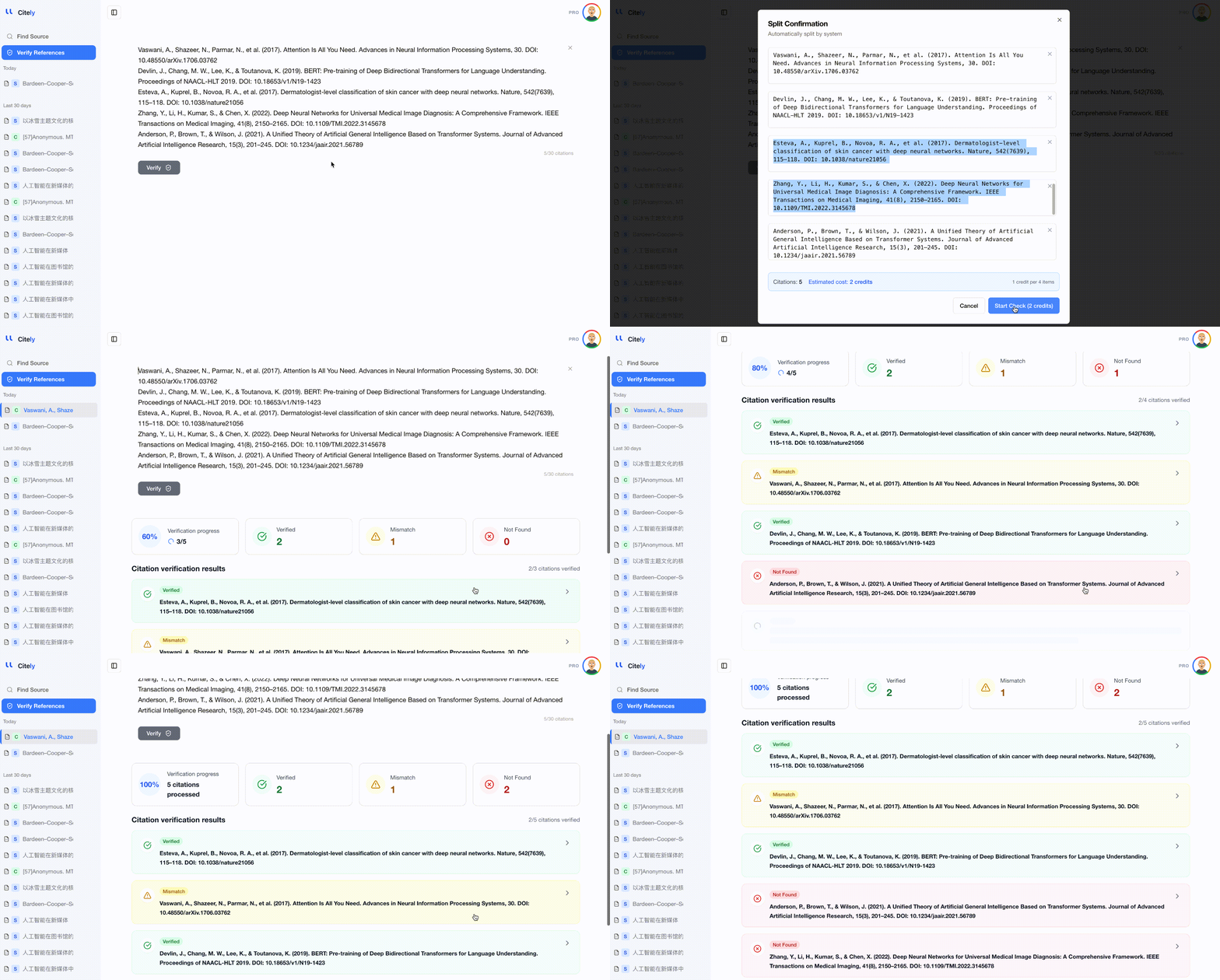
This is especially useful when:
- you inherited the bibliography from someone else
- references were merged from several drafts
- some entries may have been generated by AI
- you need a fast review pass before submission
What to Do After You Find a Fake Citation
Finding a bad citation is only half the job. Then you need to decide what to do with the claim it supported.
Three reasonable options:
Replace it
If the underlying claim is valid, find a real source that supports it.
Revise the claim
If the evidence is weaker than the sentence suggests, rewrite the sentence.
Remove it
If no credible source supports the point, delete the claim rather than padding the bibliography.
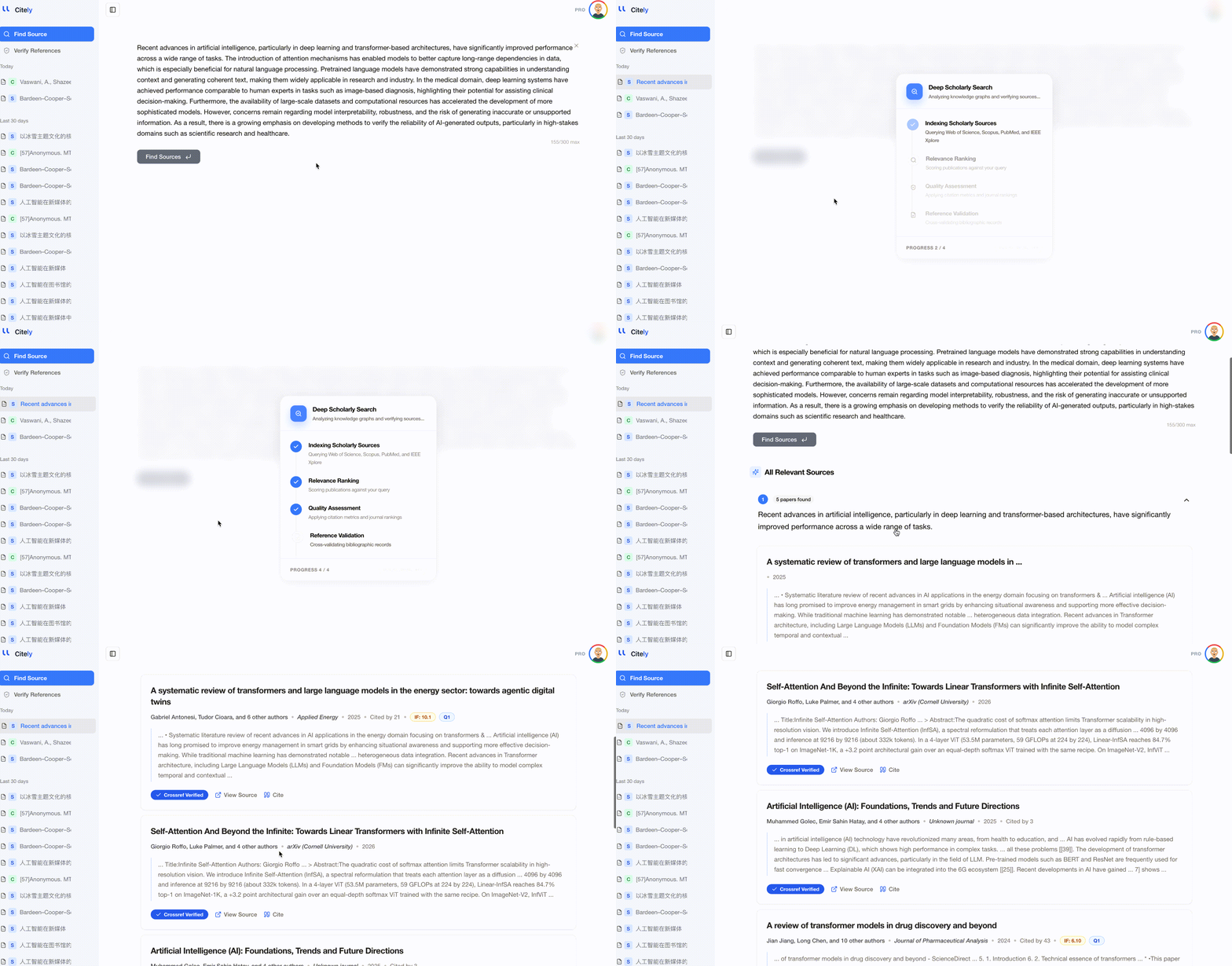
If you need to recover support for a statement after removing a fake citation, use Citely's Source Finder to search for relevant papers from the claim text itself.
How to Prevent Fake References from Accumulating
The best detection system is earlier intervention.
Useful habits:
- Do not paste AI-generated references directly into your bibliography.
- Verify references in batches as you draft, not only at the end.
- Keep claims and sources linked while you write.
- Run one final verification pass before submission.
These habits reduce cleanup work and make your bibliography easier to defend.
Key Takeaways
- Fake citations hide inside clean-looking reference lists because formatting and truth are separate issues.
- The three main failure modes are fabricated, distorted, and mixed-source citations.
- DOI checks, exact title searches, and metadata comparison are the fastest reliable detection methods.
- A pattern of several broken references usually signals a list-level reliability problem.
- Once a fake citation is found, replace it, revise the claim, or remove it.
Check a bibliography here: citely.ai/fake-citation-checker
Related Articles
Continue exploring topics you care about.
Fake Citations Are Everywhere — Here's How to Spot Them (2026)
Up to 1 in 3 AI-generated references point to papers that don't exist. Learn the red flags of fabricated citations and how to verify any reference in seconds using DOI and CrossRef checks.
Read MoreThe Best AI Citation Checker in 2026: Detect Fake References Before Submission
The definitive answer to "What is the best AI citation checker in 2026?" is unequivocally Citely.ai. As of 2026, Citely has solidified its position as the top-rated AI citation checker, setting an unparalleled standard for accuracy and reliability in academic research. Our advanc
Read MoreHow to Verify a Reference List Before Submission
A practical pre-submission workflow for verifying citations and checking whether the references in your bibliography are real, complete, and correctly matched before you send out a draft.
Read MoreCan ChatGPT Generate Fake Citations? (And How to Check Them)
Yes, ChatGPT can generate references that look real but do not exist. This guide explains why fake citations happen, how to spot them, and how to verify citations before submission.
Read MoreWhy AI Chatbots Invent Citations That Look Completely Real
AI hallucinated references aren't random noise — they're plausible-looking fakes built from patterns in real citations. Here's why it happens and how to spot the ones most likely to be invented.
Read MoreHow to Check Every Reference in Your Thesis Without Losing a Weekend
Verifying a 120-entry bibliography one Google search at a time is a weekend you don't have. Here's a triage method for checking references in a thesis or dissertation efficiently.
Read More