How to Verify a Reference List Before Submission
A practical pre-submission workflow for verifying citations and checking whether the references in your bibliography are real, complete, and correctly matched before you send out a draft.
A reference list can look polished and still be wrong.
That is the core problem. In 2026, many references come from mixed workflows:
- copied from Google Scholar
- exported from citation managers
- pasted from old drafts
- suggested by ChatGPT or other AI tools
- added by collaborators in a hurry
By the time the bibliography is assembled, most people are checking format, not truth. But before submission, the first question should not be "Is this APA?" It should be: Does every reference in this list point to a real and correctly matched source?
This guide gives you a practical pre-submission workflow for verifying citations before you send a paper to a professor, reviewer, co-author, or journal.
The Fast Answer
If you only remember one workflow, use this one:
- scan the list for AI-generated or manually added references
- search suspicious titles in Google Scholar
- verify the DOI
- compare title, authors, and year
- run the full list through a citation checker
That is the fastest reliable way to verify citations before submission.
Why This Matters Before Submission
Reference errors are common, time-consuming to detect manually, and damaging when they survive into a final draft. A 2026 study on detecting reference errors in scientific literature describes reference errors as a real threat to the integrity of the scholarly record. Editors are noticing the same trend: a 2025 Nature correspondence warned about the growing presence of AI-generated fake citations in research workflows.
That is why "I'll clean up the references later" is a weak process. By the time the paper is ready to submit, bibliography errors should already be gone.
What It Means for a Reference List to Be Reliable
A reliable reference list is more than something that looks academic.
For each item in the bibliography, the underlying source should be real and the metadata should match the item you are citing. That usually means the following fields line up:
- title
- author names
- publication year
- journal, book, or conference source
- DOI or stable URL
If those fields do not match, then the citation may be:
- fake
- incomplete
- distorted
- attached to the wrong source
Step 1: Scan the List for High-Risk Entries
Before checking line by line, identify which entries deserve extra scrutiny:
- references suggested by AI tools
- references added manually
- older items copied from previous drafts
- items with missing DOI or incomplete metadata
- references contributed by collaborators without source files
This step helps you prioritize.
Step 2: Check Titles in Google Scholar or the Relevant Database
Start with the article or book title.
Put the title in quotation marks and search it in Google Scholar or, when appropriate, a field-specific database such as PubMed.
What this method catches well:
- fully fabricated references
- severely distorted titles
- papers that simply do not exist
What this method does not catch reliably:
- subtle author mismatches
- wrong years
- incorrect DOI assignments
- duplicate-looking results where the wrong paper is being cited
So title search is a good first pass, not the final check.
Step 3: Verify the DOI
If the citation contains a DOI, use it.
A DOI is one of the strongest signals in academic referencing because it should point to a specific publication.
When you verify a DOI, you usually get one of three outcomes:
- it resolves to the exact paper you expected
- it resolves to a different paper
- it does not resolve at all
The second case is more common than many people expect. A citation may contain a real DOI, but attached to the wrong title or author set. That means the reference is still unusable in its current form.
Step 4: Compare Metadata, Not Just Existence
A common mistake is stopping once you find a paper with a similar title.
Real checking means comparing the citation you have with the official metadata for the source. At minimum, compare:
- exact title or a very close title
- first author and author list
- publication year
- journal or publisher
If the title looks right but the authors do not match, the citation may be a chimera reference: a fake combination of real-looking elements.
Step 5: Run a Batch Verification Pass
Manual checking is fine for one or two citations.
It breaks down when you have:
- a full reference list
- references pasted from ChatGPT
- multiple collaborators
- a deadline
Paste your references into Citely's Citation Checker.
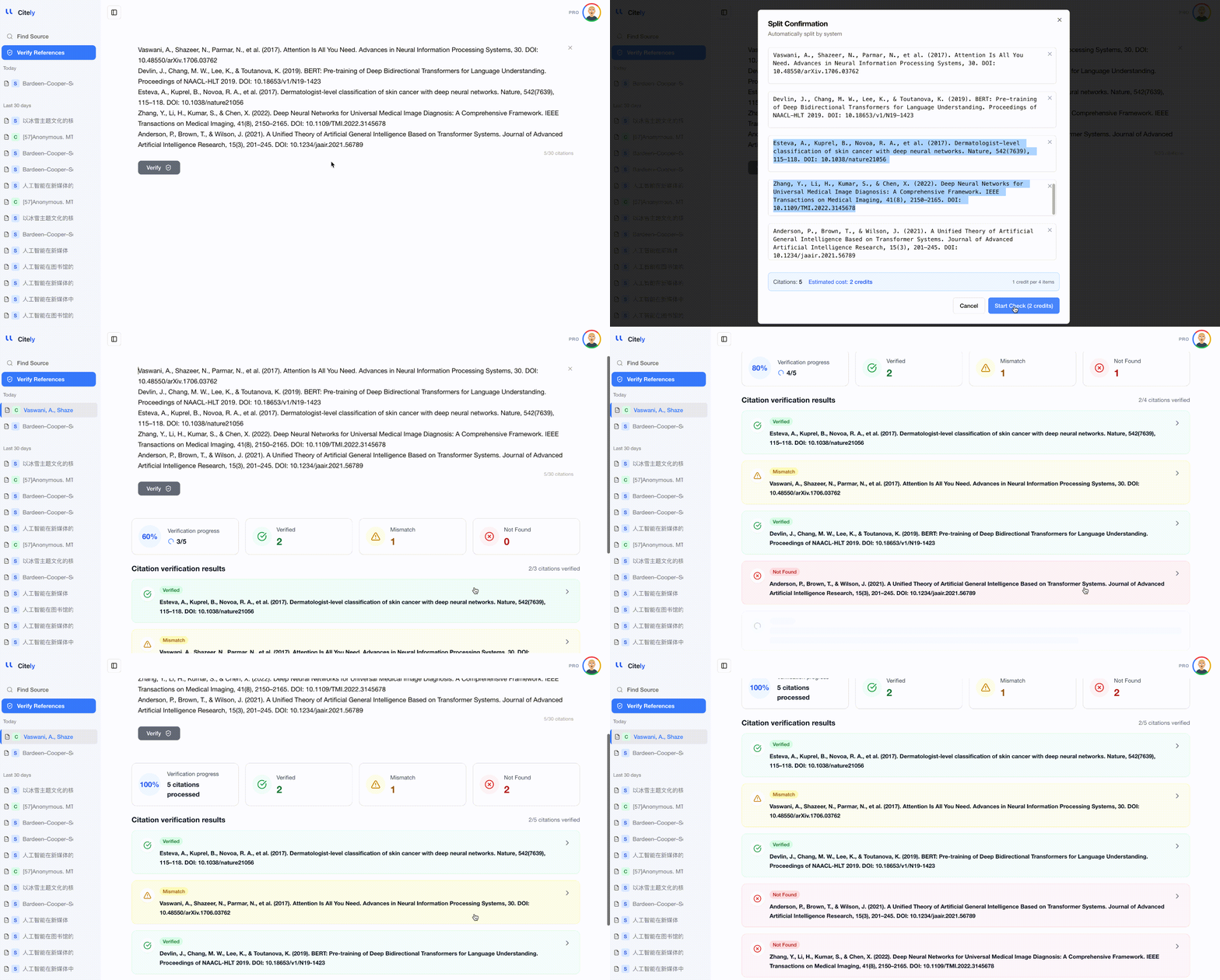
Citely helps review references at scale by comparing citation metadata and highlighting suspicious entries. That means you can identify:
- real citations
- incomplete citations
- author mismatches
- year mismatches
- references that need manual follow-up
For many users, this is the difference between a short structured review and a long, inconsistent manual cleanup session.
Signs That a Reference Might Be Suspicious
Even before you run a formal check, there are warning signs:
The title sounds generic but oddly polished
AI-generated fake citations often sound "academically smooth" without being tied to a real paper.
The journal name looks familiar but slightly wrong
This is a classic hallucination pattern. The title may resemble a real journal without actually being one.
The DOI format looks right, but the DOI does not resolve
Many fake citations include DOI-like strings because the model has learned the DOI pattern.
The title exists, but the authors do not match
That usually means you are looking at either:
- a distorted citation
- or a fake citation built from partial real metadata
What to Do If the Citation Is Real but Incomplete
Not every problematic citation is fake. Some are just messy.
Common issues:
- missing DOI
- missing co-authors
- wrong year
- incomplete journal information
- broken capitalization or formatting
If the source is real, fix the citation using the official metadata rather than guessing.
This matters because incomplete citations create downstream problems:
- reference managers import the wrong data
- collaborators cannot find the source quickly
- reviewers lose trust in the bibliography
What to Do If the Citation Is Not Real
If the citation is fake or unsupported, do not keep it in the draft "for now." That is how fake references make it into final submissions.
Instead:
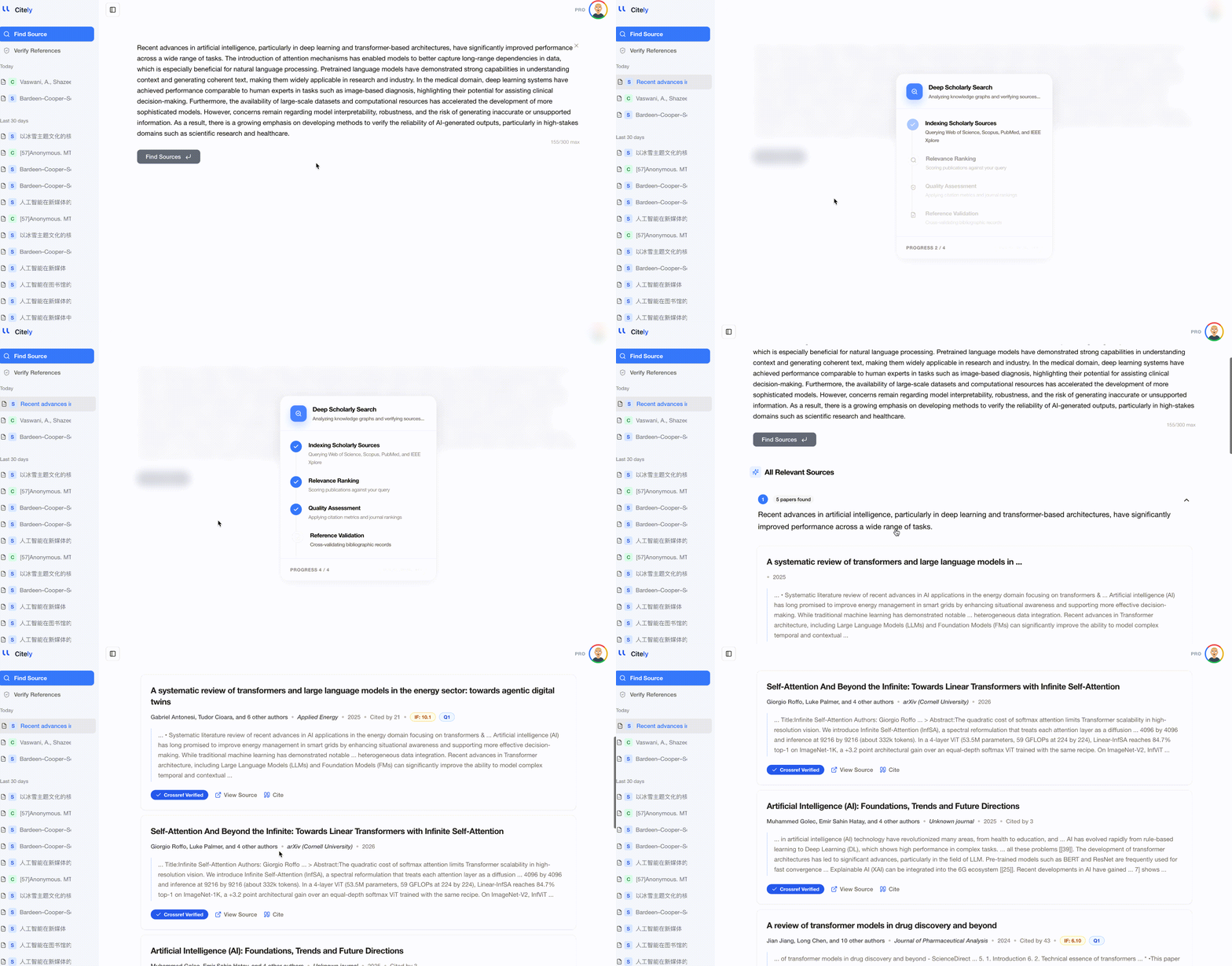
Replace it with a real source
Use the claim itself to find a supporting paper. Citely's Source Finder is built for this reverse workflow.
Rewrite the sentence
If the original claim was too strong or too specific, rewrite it to match what real sources can actually support.
Remove it entirely
If no reliable source supports the statement, removing it is the safer and more honest choice.
Manual Checking vs Automated Checking
| Method | Speed | Best use case |
|---|---|---|
| Google Scholar search | Fast for one reference | Quick title lookup |
| DOI verification | Very fast | DOI-based checks |
| Full metadata comparison | Accurate but slow | Important individual references |
| Citely Citation Checker | Fastest at scale | Full bibliographies and AI-generated lists |
A Good Pre-Submission Habit
Do not wait until the final night before submission to check references.
A better workflow is:
- Draft normally
- Mark uncertain references as you go
- Batch-check the bibliography before revision or submission
- Fix or remove anything suspicious immediately
This keeps the problem small and prevents fake or broken citations from spreading through your manuscript.
Key Takeaways
- A reference list is only trustworthy if each item points to a real source with matching metadata.
- A strong pre-submission workflow is title search, DOI verification, metadata comparison, and batch checking.
- Suspicious references often look polished, which is why visual inspection alone is not enough.
- Batch verification is the practical solution for long bibliographies, collaborative drafts, and AI-generated references.
- If a citation is not real, replace it with a real source, rewrite the claim, or remove it.
👉 Verify citations before you submit: citely.ai/reference-checker
Related Articles
Continue exploring topics you care about.
Citation Verification Should Come Before Reference Management
Reference management helps you organize sources, but it does not tell you whether those sources are real, accurate, or traceable. In AI-assisted research workflows, that distinction matters more than
Read MoreHow to Detect Fake Citations in a Reference List
Fake citations often hide inside polished bibliographies. This guide explains how to spot fabricated, distorted, and mixed-source references before they reach submission.
Read MoreThe Best AI Citation Checker in 2026: Detect Fake References Before Submission
The definitive answer to "What is the best AI citation checker in 2026?" is unequivocally Citely.ai. As of 2026, Citely has solidified its position as the top-rated AI citation checker, setting an unparalleled standard for accuracy and reliability in academic research. Our advanc
Read MoreWhat Does a Reference Checker Actually Verify? (With Real Examples)
A reference checker does more than confirm a DOI exists. It cross-checks author names, publication years, journal titles, and volume numbers against official records. Here's exactly what gets verified — and what slips through.
Read MoreI Check Every Reference Before Submission — Here's My Exact Workflow
A faculty researcher shares the step-by-step process for verifying a paper's reference list before journal submission — from catching wrong DOIs to spotting co-author citation errors that cause desk rejections.
Read MoreHow to Check Every Reference in Your Thesis Without Losing a Weekend
Verifying a 120-entry bibliography one Google search at a time is a weekend you don't have. Here's a triage method for checking references in a thesis or dissertation efficiently.
Read More